







Search Results for: disease-resistant breeding
WCR launches global robusta breeding network; Uganda trial planting of disease-resistant varieties has delivered nearly 50,000 seedlings
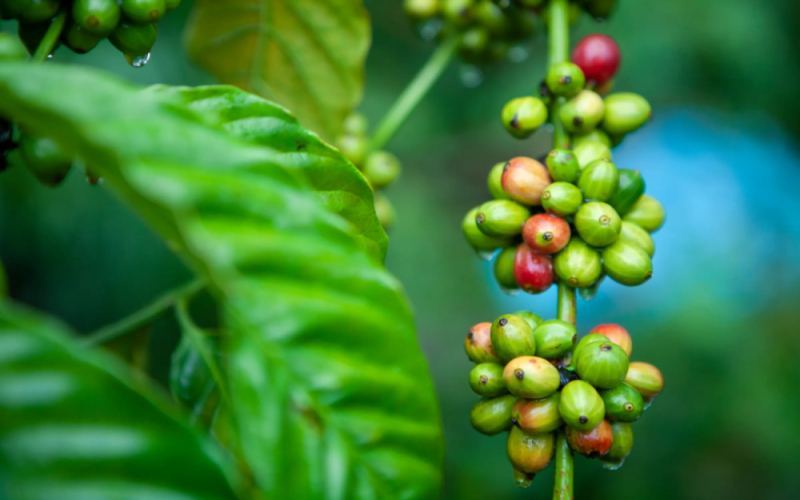
Robusta's share of global coffee production has climbed from 25% in the early 1990s to 40%, with market demand continuing to rise, yet breeding and improvement efforts have long lagged behind. WCR predicts that if consumption growth overlaps with the climate crisis, the global coffee supply could face severe shortages in 2024. To address this, WCR is about to launch a Robusta breeding program using a large amount of genetic material provided by CIRAD, and will work with major producing countries to build a global breeding network. Meanwhile, planting trials in Uganda have already been implemented, distributing nearly 50,000 disease-resistant Robusta (KR) trees to farmers. Front Street Coffee continues to monitor the industry trends and variety innovations in Robusta. [more…]
Yunnan Catimor Coffee Bean Variety Analysis: From Disease-Resistant Breeding to Specialty Flavor Evolution
Yunnan small-bean coffee has attracted increasing attention from domestic coffee enthusiasts in recent years, and Catimor, as the most widely planted coffee variety in Yunnan, has an origin and flavor evolution worthy of deeper understanding. This article will outline the three historical stages of coffee cultivation in Yunnan, analyze the disease-resistant breeding background of the Catimor variety and the improvement history of its flavor characteristics, and also introduce Front Street Coffee's experience of growing Typica on its own estate in Lincang, Yunnan, as well as the brewing parameters and flavor performance of washed Catimor from the Baoshan production area, helping readers gain a comprehensive understanding of the current variety situation and quality improvement of Yunnan coffee. [more…]
What exactly does the coffee variety F1 refer to? Analyzing the breeding process of the first filial generation and its representative bean varieties.
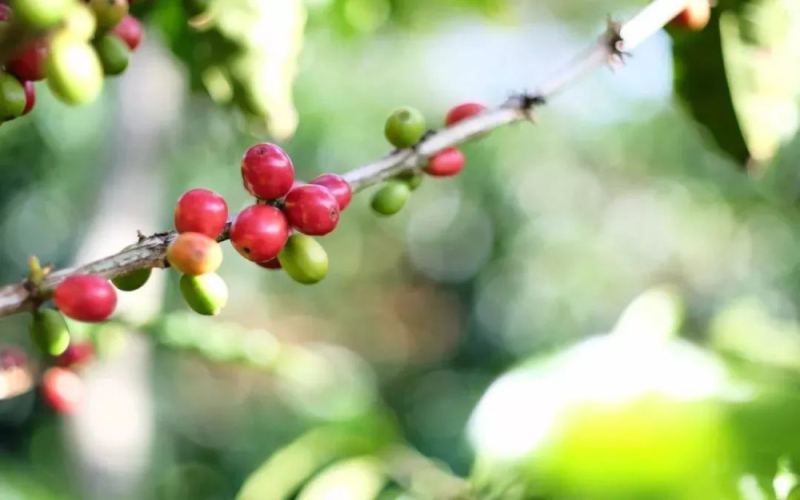
In the naming of coffee varieties, combinations of letters and numbers are not uncommon, but F1 is not a single variety—it is a collective term for a class of hybrid progeny. It originated from a breeding program promoted jointly by the French Agricultural Research Centre for International Development and the Coffee Institute of Costa Rica, among other institutions, after the major leaf rust outbreak of the 1970s, aimed at cultivating a new generation of coffee that is high-yielding, disease-resistant, and excellent in flavor. Although F1 varieties possess many advantages, they are also difficult to promote on a large scale due to the difficulty of propagation and high costs. This article will guide you through the background of F1's creation, its selection process, its main characteristics, and important commercialized representatives such as H1 and Ruiru 11, while combining recommendations from Front Street Coffee to present this innovative achievement in the field of coffee breeding. [more…]
Why Do Coffee-Producing Countries Stick to Certain Varieties for So Long? A Panoramic Analysis from the History of Leaf Rust to Laboratory Breeding
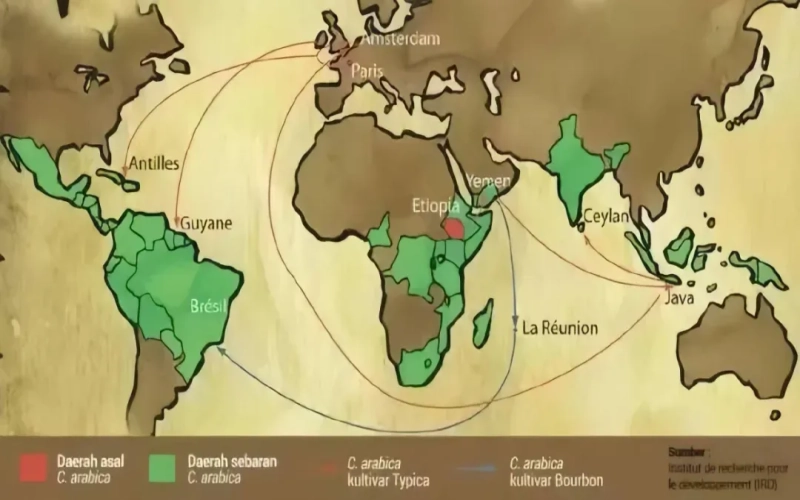
When you shop for coffee beans, have you ever noticed that certain origins always seem to grow just a few fixed varieties? Brazil, for instance, is dominated by Bourbon, while Jamaica Blue Mountain is inseparable from Typica. Behind this lies both the logic of variety dissemination and natural adaptation, as well as a chapter of coffee history rewritten by leaf rust. That devastating disease at the end of the 19th century forced many producing countries to turn to research on disease-resistant new varieties, leading to the establishment of national coffee research institutes. This article will walk you through the origins and development of common laboratory varieties such as Catuai, SL28, SL34, Ruiru 11, and H1, and how they became the mainstays of today's producing regions. It will also mention related beans selected by Front Street Coffee, offering you a practical buying reference. [more…]

Yunnan small-bean Catimor coffee: variety origins, disease-resistance advantages, and a comparison of washed vs. natural flavors
Catimor is one of the most controversial yet most widespread coffee varieties in the world. Thanks to its Robusta lineage, it has gained exceptionally strong disease resistance, but for the same reason it carries the stereotype of having a rough flavor profile. From the perspective of Front Street, this article traces Catimor's breeding history and its journey of introduction into Yunnan, explaining why it has become the dominant variety in Yunnan coffee. At the same time, through a V60 brewing comparison of two Baoshan Catimor beans from Front Street—a washed one and a red cherry natural one—it concretely presents the flavor profiles Catimor can display under different processing methods, helping enthusiasts rediscover this everyday yet unusual coffee. [more…]
Sarchimor Variety Analysis: Costa Rican Coffee Bean Flavor Characteristics, Price, and Pour-Over Parameters
Costa Rican coffee is famous for its honey processing method, a technique that falls between natural and washed processing, retaining a clean cup while greatly enhancing sweetness and caramel notes. Sarchimor is a disease-resistant variety originating from a Portuguese breeding institution, with disease resistance inherited from Timor and flavor derived from Villa Sarchi, and it has considerable production in both Costa Rica and Brazil. Front Street Coffee focuses on this bean in this issue, breaking down everything from green bean characteristics and roasting curves to cupping performance, and provides specific pour-over recipes along with sweetness, acidity, and bitterness scores. It also includes a brand recommendation of 227 grams for 95 yuan, costing about 6 yuan per cup, offering outstanding value and suitable for everyday drinking. [more…]
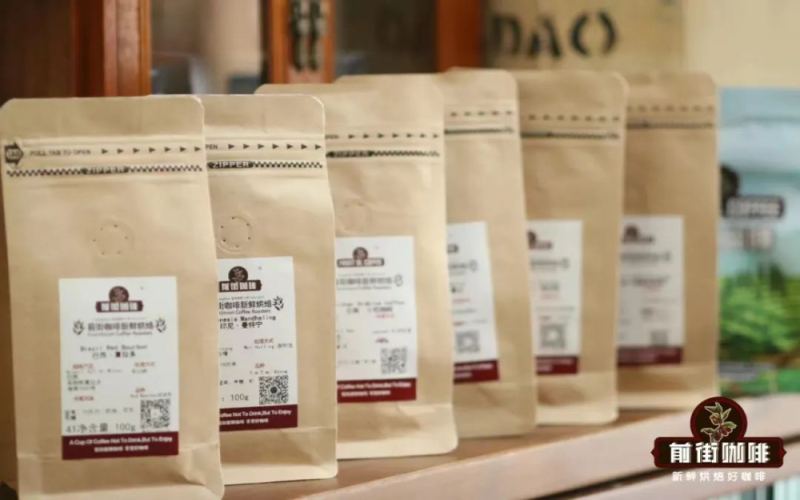
The Complete Guide to Coffee Variety Codes: The Stories and Origins Behind 74110, SL34, F1, and H1
When selecting coffee beans, a string of mysterious codes occasionally appears in the variety column, such as 74110, SL34, F1, H1, and so on. They do not have resounding names like Typica or Geisha, yet each carries a piece of breeding history. What exactly do these codes mean? Are they years, experiment numbers, or abbreviations of research institutions? This article will trace the origins of these numbered varieties, from disease-resistant varieties in Ethiopia to selections by the Scott Laboratories in Kenya, and then to the F1 hybrid program in the Americas, uncovering the mysteries of their identities one by one. Front Street Coffee will also share the unique charm of these varieties in the cup, combined with their flavor performance. [more…]
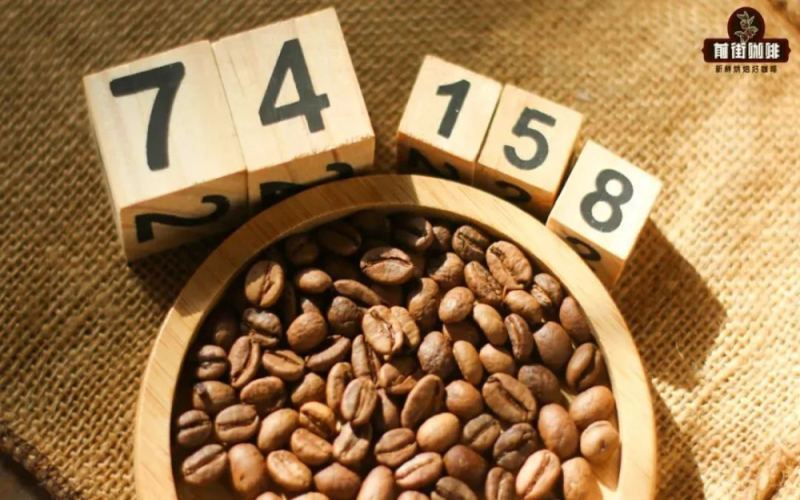
The Origin and Flavor Characteristics of Ethiopian Digital Coffee Varieties 74158 and 74110
When purchasing Ethiopian coffee, in addition to the common Heirloom native variety label, in recent years more and more varieties with numerical codes have entered the public eye, such as 74158, 74110, and others. What exactly do these numbers represent? They are closely related to a period of disease-resistant breeding history in the Ethiopian coffee industry. In the 1970s, coffee anthracnose ravaged Ethiopian producing regions, prompting the Jimma Agricultural Research Center to launch a systematic breeding program, selecting from hundreds of samples several varieties that combined disease resistance with excellent flavor. This article will outline the origins of these numerical varieties, their classification logic, the flavor characteristics of their main representatives, and their performance in COE competitions, and will also introduce related products brought in by Front Street Coffee. [more…]
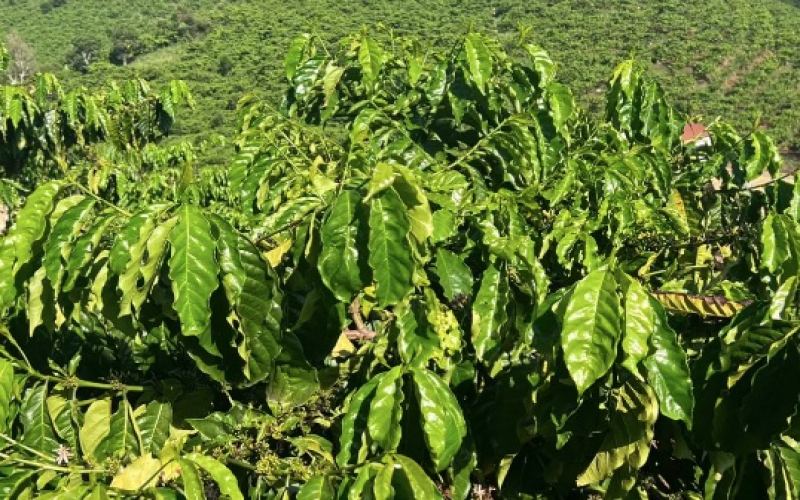
Why do some origin places only produce a fixed number of coffee varieties?
At present, some coffee-producing countries basically only produce a few fixed coffee varieties, such as Brazil mainly produces Bourbon, and Jamaican Blue Mountain mainly produces Typica, etc. In fact, in many cases, it is due to the spread of coffee [more…]
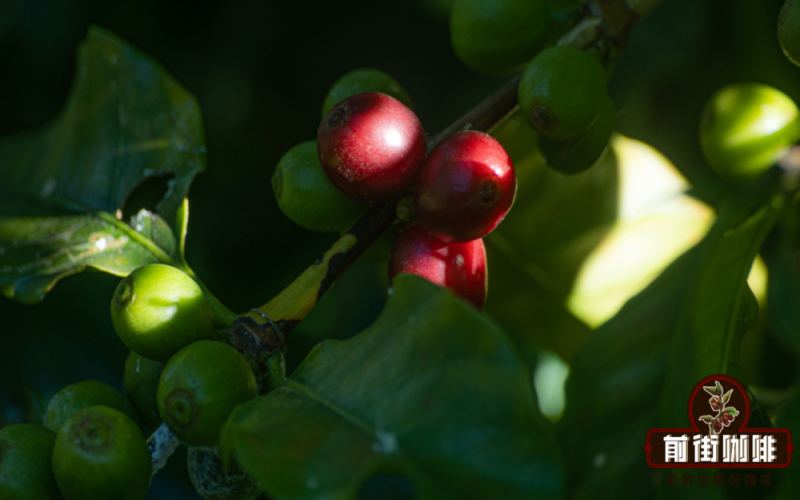
The Origins and Disease-Resistant Characteristics of the Catimor Coffee Variety: A Full Analysis of the Flavor Pros and Cons of Yunnan Catimor Coffee Beans
Catimor is a coffee variety bred by crossing Arabica with Robusta, and it is widely planted in Central and South America and Yunnan due to its resistance to coffee leaf rust and high yield. It inherits the robust genes of Robusta, yet it is also often criticized in cupping for insufficient aroma and a bitter finish. Yunnan Catimor is mostly grown in river valley areas at around 1,100 meters, and the small-bean coffee produced in places such as Baoshan is known for being rich but not bitter, and fragrant but not harsh. This article will explore Catimor's breeding history, disease-resistant advantages, flavor defects, as well as the growing conditions and harvest cycle of the Yunnan producing region, to give you a comprehensive understanding of this variety, and introduce the performance of specialty coffees such as Front Street Coffee 2013 Yunnan Typica. [more…]
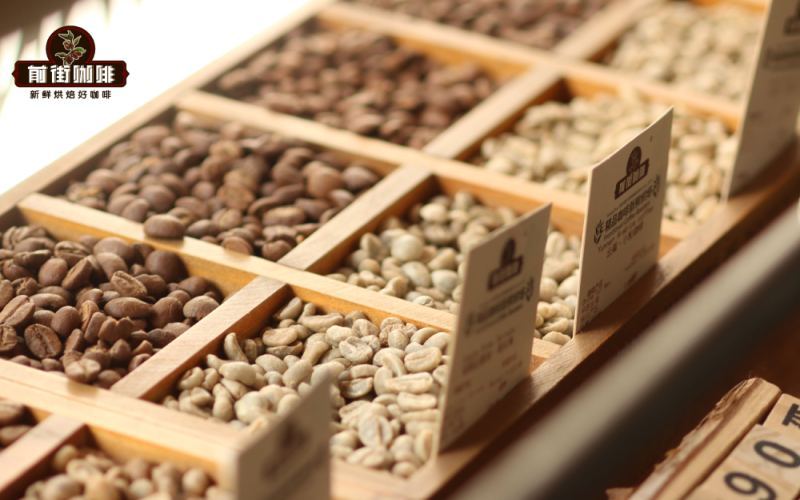
Does Catimor really count as Arabica? The past, present, and flavor truth of Yunnan Catimor coffee varieties
In the world of coffee, Arabica beans are highly prized for their elegant aroma and pleasant acidity, but is the Catimor variety that has appeared frequently in recent years actually Arabica? What kind of lineage flows through it? Why is it planted on a large scale in Yunnan? From the perspective of Front Street, this article sorts out the basic characteristics of Arabica, traces the breeding history of Catimor, analyzes the reasons why it is disease-resistant and high-yielding yet compromised in flavor, and focuses on the industrial changes and specialty-coffee exploration of Catimor in Yunnan. The article also includes Front Street Yunnan small-bean coffee's producing-region information, flavor description, and V60 three-pour brewing parameters, taking you through a comprehensive understanding of this special variety carrying Robusta genes. [more…]
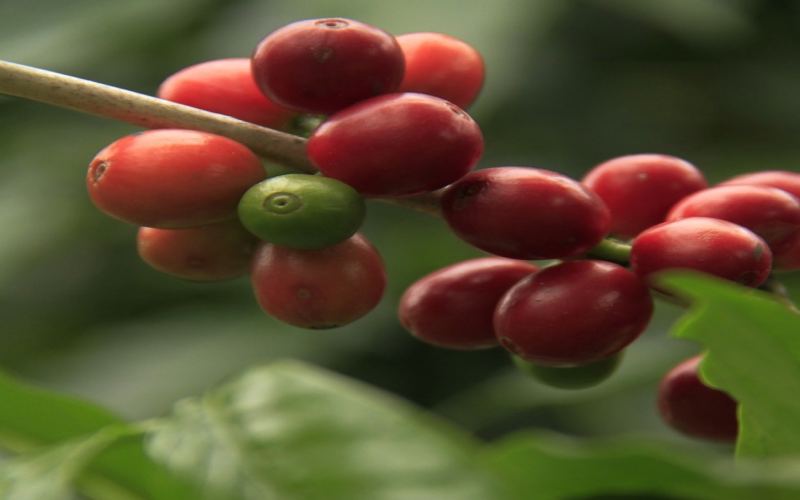
Coffee Leaf Rust: A Disease That Changed the Varietal Landscape
In the history of coffee cultivation, if only one disease were allowed to be recorded, it would have to be leaf rust. This plant plague caused by a fungus once destroyed the entire coffee industry of Ceylon in the nineteenth century, and then over the following hundred-plus years spread to nearly every producing region in the world, profoundly rewriting the varietal landscape and trade patterns of coffee. It [more…]
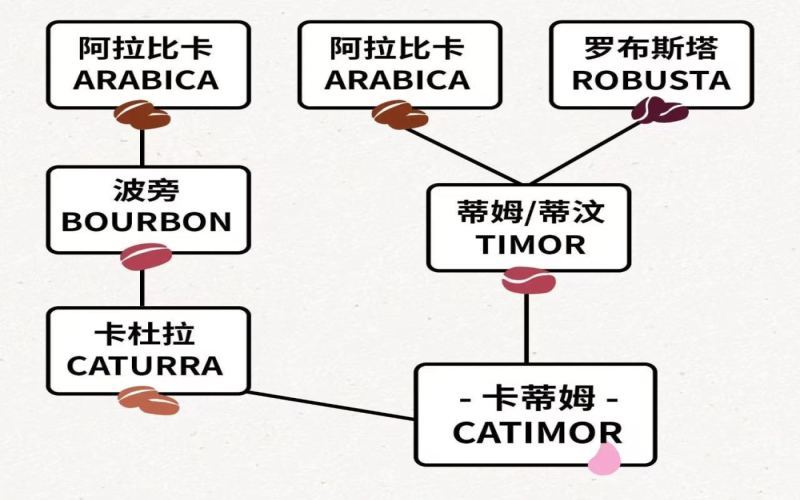
The Origin and Spread of the Catimor Coffee Variety Group: From Leaf Rust Resistance Hybridization to the Transformation of Yunnan Small-Bean Coffee
Catimor is not a single variety, but rather a group of varieties with similar bloodlines, and its birth stemmed from humanity's efforts to combat coffee leaf rust. From the natural hybrid Timor Hybrid found on the island of East Timor to its combination with Caturra, Catimor inherited the flavor potential of Arabica and the disease-resistant genes of Robusta. This variety group is widely cultivated in the Americas and Asia, especially in Yunnan, China, where Catimor replaced the traditional Typica and became the main variety. This article will sort out the origins of Catimor, the representative varieties bred in various places, and its role in Yunnan small-bean coffee, and discuss the relationship between its flavor expression and growing conditions. Front Street Coffee believes that Yunnan Catimor presents a balanced flavor of nuts, brown sugar, and plum. [more…]
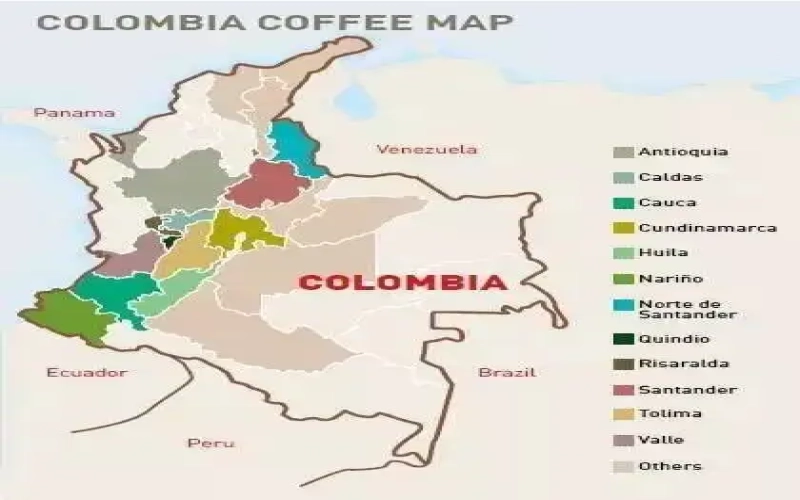
A Complete Guide to Colombian Specialty Coffee Regions: Harvest Seasons, Flavor Profiles, Varieties, and Processing Methods
Colombia is the world's third-largest coffee exporter and the largest exporter of Arabica beans and washed beans. This article systematically reviews the core knowledge of Colombian specialty coffee: starting from the terroir conditions of the three major producing regions in the Andes Mountains, it explains in detail the differences between the northern and southern harvest seasons and the harvest time windows, introduces major varieties such as Caturra, Bourbon, and Castillo as well as the history of disease-resistant breeding, analyzes the unique characteristics of household washed processing, and examines one by one the flavor characteristics of well-known producing regions such as Santander, Huila, Cauca, and Nariño. The article also includes the producing region information and brewing flavors of several Colombian beans from Front Street Coffee, providing coffee enthusiasts with a complete framework for understanding Colombian coffee. [more…]

Exploring Costa Rican Coffee: ICAFE Research Institute, Variety Development, and Flavor Analysis of Canet Estate's Mozart
Although Costa Rica has a limited land area, it has become the world's fourteenth-largest coffee-producing country thanks to its fertile volcanic soil and long-term government support. This article traces the journey from the coffee defense institution established in 1933 to today's ICAFE research institute, outlining its role in advancing variety research and industrial upgrading, with a focus on disease-resistant breeding in cooperation with Starbucks and the birth of the Venecia variety. At the same time, the Musician Series Mozart from Canet Estate, which Front Street Coffee has acquired, uses a raisin honey process to present star fruit, berry acidity, and raisin sweetness. This article also shares its V60 brewing parameters and flavor performance. [more…]
Kenyan Coffee Bean Flavor Characteristics and Regional Variety Analysis: A Complete Guide from SL28 to K72 Washed
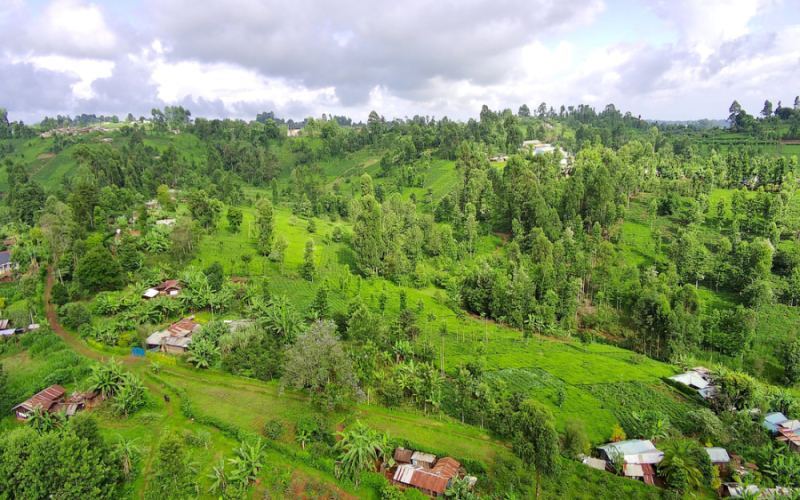
Kenya is a coffee origin that cannot be overlooked on the global specialty coffee map, and its coffee is famous for its bright berry-like acidity and clean, sweet taste. Starting from Kenya's geographical and climatic conditions, this article will systematically outline the altitude range for coffee cultivation and the distribution of major producing regions, review the breeding history of classic varieties such as SL28 and SL34, introduce the disease-resistant characteristics of the Ruiru 11 variety, and provide an in-depth analysis of Kenya's iconic K72 washed processing method. In addition, the article will explain Kenya's grading system based on bean size, as well as brewing methods developed for the characteristics of Kenyan coffee beans, including practical parameters such as grind size, water temperature, coffee-to-water ratio, and pouring technique, to help coffee enthusiasts better understand and appreciate the unique charm of Kenyan coffee. [more…]
A Complete Guide to Sudan Rume Coffee Beans: Origin, History, Flavor Profile, and Breeding Value
Sudan Rume is an ancient coffee variety with extremely low yield yet outstanding flavor, which shot to fame after being selected by the 2015 WBC champion. It originated in the border region between the Boma Plateau and the Rume Valley in Africa, was only formally documented in the 1940s, and has long been used as a hybrid father plant since then. Front Street Coffee once tasted a washed Sudan Rume batch from Costa Rica, and its bright acidity and juicy mouthfeel reminiscent of lemon and plum were deeply impressive. This article will outline this rare variety's historical origins, plant characteristics, flavor performance, and important position in modern breeding. [more…]

A Full Analysis of the Flavor Characteristics of Colombian Huila Region Coffee Beans and the Functions of the FNC
Colombia, as the world's third-largest coffee exporter, is renowned for producing smooth, balanced Arabica coffee, hailed as "green gold." Its Huila region, with the volcanic soil of the Andes and its high-altitude microclimate, has become a hallmark of specialty coffee. This article systematically introduces the history of Colombian coffee cultivation, variety selection and breeding, washed processing, the characteristics of major producing regions, and the grading system, while also providing an in-depth interpretation of the roles of the Colombian Coffee Growers Federation (FNC) and the National Coffee Research Center (CENICAFE). It also includes Front Street Coffee's roasting recommendations, offering coffee lovers a complete understanding from origin to cup. [more…]
An Analysis of Kenya's Ruiru 11 Coffee Variety: The Breeding Journey Behind Disease Resistance and High Yield, and the Flavor Controversy
Kenyan coffee has long been famous for the SL series of varieties, but although SL varieties are outstanding in quality, they are extremely vulnerable to pests and diseases. To address this dilemma, the Kenyan coffee industry began promoting new varieties that combine disease resistance with climate adaptability, and Ruiru 11 is one of the representatives. This variety, officially released in 1985, has what kind of breeding story behind it? Why is it welcomed by farmers, yet also triggers quality controversy? This article will give you a comprehensive understanding of the background of Ruiru 11's creation, its varietal characteristics, cultivation advantages, and the challenges it currently faces. If you are interested in Kenyan coffee, Front Street Coffee also has related beans available for tasting. [more…]
What exactly does coffee variety 74110 represent? A rundown of disease-resistant seeds bred in Ethiopia
In the world of specialty coffee, varieties named after numbers are becoming increasingly common, and 74110 is one of the most talked-about. It comes from Ethiopia, the birthplace of coffee, was bred by the Jimma Agricultural Research Center, and is one of the pioneering varieties in the fight against coffee berry disease. This article will walk you through the origin of the name 74110, the background of its discovery, its plant characteristics, and its flavor profile. We will also look at Ethiopia's unique approach to variety selection and the concept of "heirloom varieties," and see how this variety frequently appears in COE competitions. Front Street Coffee invites you to explore the story behind this number. [more…]